
EXTENDED SCHOOL YEAR (ESY): A QUICK GUIDE FOR PARENTS
If your child has an IEP, you may hear about Extended School Year (ESY) services as summer approaches. But what is ESY and how do you know if your child qualifies?
This is an important conversation and one that often comes with confusion.
Let’s break it down so you can walk into your next IEP meeting with clarity and confidence.
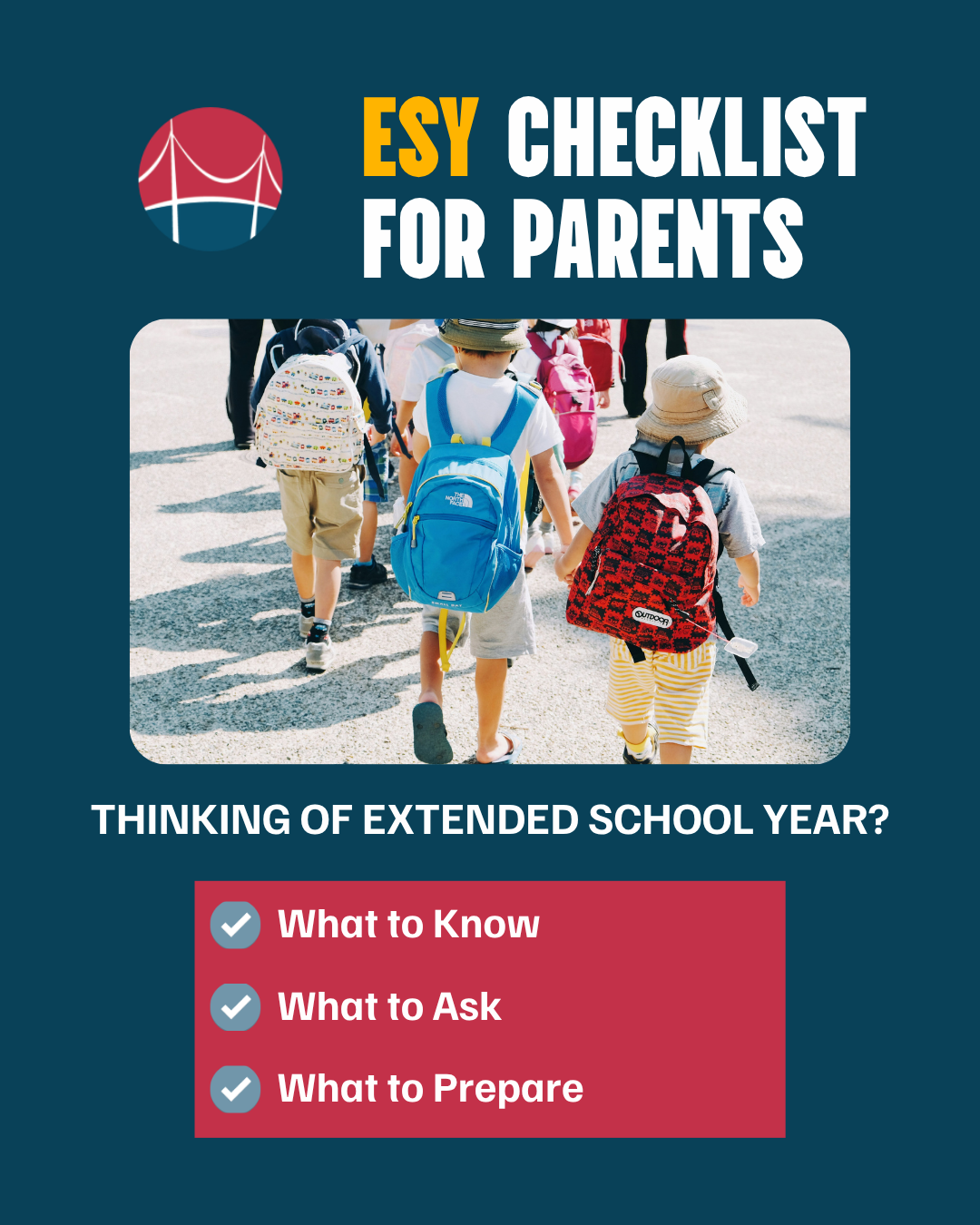
EXTENDED SCHOOL YEAR (ESY)
vs.
Summer School
ESY is often misunderstood.
ESY = maintaining critical skills
Summer School = catching up academically
ESY is not about helping a child get ahead. It’s about preventing significant regression.
What to Know
Extended School Year (ESY) is special education and related services provided outside of the regular school year.
ESY eligibility is an IEP team decision. The IEP team decides ESY based on data and individual need.
ESY is provided at no cost to families and must be written directly into the IEP if approved.
ESY decisions are individualized and not every child with an IEP qualifies.
ESY must be provided if it is necessary for your child to receive a Free Appropriate Public Education (FAPE).
ESY should be considered every year.
ESY can happen during summer OR other extended breaks.
What to Ask
Parents can request a Special Review IEP Meeting to discuss ESY, but the IEP team decides ESY based on data and individual need. Use the following key factors and questions in an IEP Meeting:
Past regression and recoupment - All students regress somewhat, but ESY is considered when that regression is significant and hard to recover from. Ask “What data shows my child’s regression after past breaks (summer, winter, etc.)? How long does it take my child to regain lost skills? Which IEP goals are at risk without continued services?”
Emerging skills - Ask “Is my child on the verge of learning a critical skill? Would a break interrupt that progress?”
Nature and severity of the disability - Ask “Does my child’s disability impact their ability to maintain skills without consistent support?”
Special Circumstances - If your child has experienced frequent absences or behavioral regression, or if they have or will be experiencing transition periods, talk to the IEP team about considering ESY.
What to Prepare
This is where your voice matters most. Your input is valuable and parent observations are part of the data. When you meet with the IEP team, bring:
Notes on what you’ve seen at home during and after breaks
Examples of skills your child loses or struggles to regain
Any communication from teachers and/or therapists
Written questions and concerns
A copy of your child’s current IEP
If ESY is denied, you have the right to ask for more data, clarification or even challenge the decision.
Final Thoughts
ESY can play a key role in helping your child maintain progress. If you think your child may need consistent support to maintain skills, this is a conversation worth having. Don’t wait! Send an email today to ask your IEP team to discuss ESY.
Want to Learn More?
Here’s a helpful video that breaks ESY down even further:
To access a print-friendly pdf of our ESY Parent Checklist, please provide your email below.
